
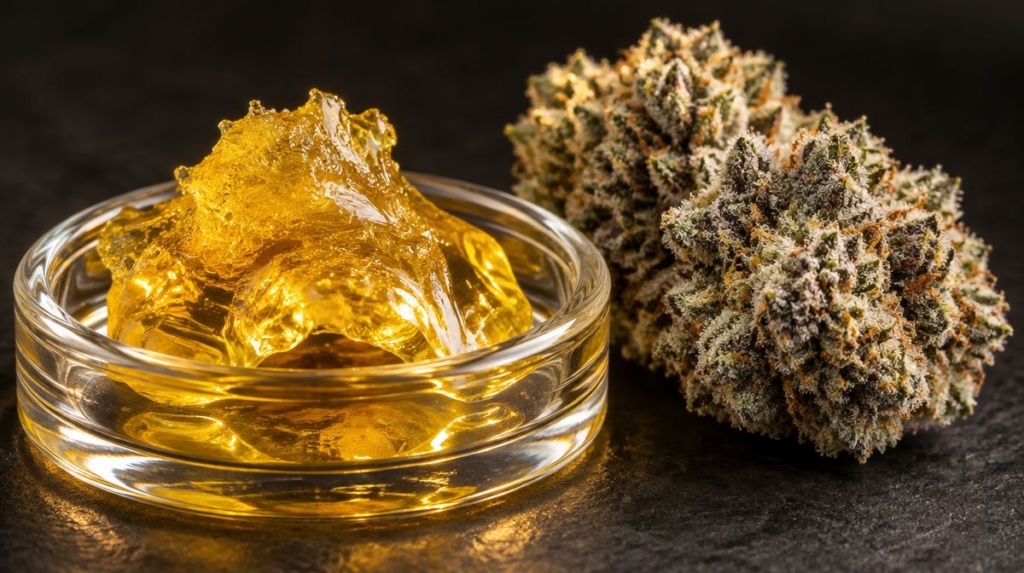
A live resin cart is made from cannabis frozen within hours of harvest instead of dried, which keeps the terpenes that carry flavor and aroma. That is why it tastes like the plant and a distillate cart does not.
Buying one comes down to two things on the package: a terpene percentage in the mid single digits or higher, and oil that runs golden to light amber. Those two signals catch most of the difference between a cart worth the money and one that is not.
This page covers how fresh frozen extraction works, what oil color and terpene percentage tell you, and which lines our budtenders reach for. It is the deep cut on our guide to the best vapes in Westchester.
What to know up front
- Live resin uses fresh frozen material: the plant goes into a freezer within hours of being cut rather than hanging to dry for a week or two. Drying is when most terpenes evaporate.
- Live resin carts typically show terpene content in the 4 to 12 percent range on the label. Distillate carts usually sit near 1 to 2 percent, with those terpenes added back after extraction.
- Good live resin runs pale gold to light amber and is sometimes slightly cloudy. Dark brown or reddish oil usually means age, heat damage, or lower grade starting material.
- Live resin is thicker than distillate, so it clogs more in the cold. Store the cart upright at room temperature and warm it in your hand before the first pull of the day.
- Toke carries live resin carts at 471 McLean Ave in Yonkers, open 10:00 AM to 10:30 PM daily, and at 2 S Central Ave in Spring Valley off Route 59, open 10:00 AM to 11:00 PM daily.
What does fresh frozen actually mean?
Most cannabis is cut, hung, and dried for a week or two, then cured in jars. Drying is necessary for flower you plan to smoke, and it costs you terpenes, the volatile aroma compounds that make one strain smell like diesel and another like lemon peel. Volatile means they evaporate, and a good share of them is gone by the time a jar hits the shelf.
Fresh frozen skips that. The plant goes into a freezer within hours of harvest, still wet, and stays frozen through extraction. The terpenes never get the chance to leave.
That is why live resin smells like the plant did in the field, and why it costs more. Freezing, cold storage, and wet material all add expense, and the yield per pound is lower. Our post on how legal cannabis gets from seed to shelf covers the rest of that chain.
Why does live resin taste better than distillate?
Distillate is THC refined until almost nothing else is left, which means no flavor. Producers add terpenes back in afterward, sometimes cannabis derived, often from fruit or botanical sources. What you taste is a reconstruction.
Live resin keeps the original terpene profile intact through extraction. You get the compounds in the proportions the plant made them, including the minor ones nobody bothers to add back. A live resin cart tastes layered. A distillate cart tastes like one flat note of candy.
The tradeoff is the potency number. Distillate tests higher because it is nearly pure THC, and live resin gives up some of that room to terpenes and other cannabinoids. Most people find live resin more satisfying at a lower number, the same argument we make in what THC percentage actually means.
What does the color of the oil tell you?
Pale gold to light amber is where good live resin lives. A little cloudiness or separation is normal, and often a sign the oil was not over processed.
Dark amber or brown oil has usually oxidized, sat in a warm warehouse, or was made from trim rather than whole flower. It will taste burnt at the back of the throat even on a low voltage setting.
Water clear oil in a cart labeled live resin is a flag. True live resin is not clear. If it looks like distillate, it probably has distillate in it, and the package should say so.
Color is a starting read. Some strains run naturally darker, and a current lab test from a producer you know earns more trust than color does. Our explainer on what lab tested cannabis actually means covers that panel.
What does the terpene percentage actually mean?
It is the share of the oil by weight made up of terpenes, and it is the single most useful number on a live resin package. Anything in the mid single digits is solid. Anything approaching double digits is excellent and you will taste it immediately.
A cart under about 3 percent terpenes is not delivering what you are paying live resin prices for, whatever the label says.
The percentage tells you intensity. It does not tell you which terpenes are there, and that decides whether the cart reads as gas, citrus, or pine. Producers that print a full breakdown are doing you a favor. Leafly’s terpene explainer is the clearest guide to reading one, and our post on indica, sativa, and hybrid labels explains why that list predicts your experience better than the category name.
Is live rosin better than live resin?
Live rosin is pressed from fresh frozen material with heat and pressure and no solvent at all. Live resin uses a solvent, usually butane or propane, which is purged off before packaging.
Most people who taste both back to back prefer rosin. It is also the most expensive thing in the case and the most fragile: rosin carts clog more, they are pickier about voltage, and they do not survive a hot car.
Buy rosin if you have decided flavor is the point and you will babysit the cart. Buy live resin if you want most of that flavor without the fuss.
Who should skip live resin carts?
Anyone buying on price per gram. Distillate gives more THC per dollar and always will.
Anyone who needs to be discreet. Live resin vapor is loud. That gas or citrus note is the thing you paid for, and it sticks to a jacket.
Anyone who leaves things in a car. Heat thins live resin until it leaks past the seals, and cold thickens it until the airflow disappears. If your cart rides down the Saw Mill in a cup holder every day, buy distillate.
Which live resin lines do we reach for?
The Connected and Alien Labs live resin drops are the benchmark for most of our staff, and very few New York menus carry that collaboration. When those carts land they move fast, so call before you drive over.
Heavy Hitters and Boutiq have both been reliable on our shelf, with hardware that holds up and oil that arrives fresh. Ayrloom‘s New York production shows in how bright the terpenes read.
Our budtenders will tell you which of this week’s carts they would spend their own money on, which is how we work the counter. To see which growers those extracts come from, read our best flower brands in Westchester guide.
Frequently asked questions
What is a live resin cart? A vape cart filled with extract made from cannabis frozen within hours of harvest instead of dried and cured. Freezing preserves the terpenes that carry flavor and aroma, so live resin tastes much closer to the living plant than distillate does. It costs more and tests lower on THC.
Is live resin stronger than distillate? No. Distillate is nearly pure THC and tests higher on the label. Live resin carries a fuller range of terpenes and minor cannabinoids, which most people find more satisfying at a lower THC number.
What is a good terpene percentage for a live resin cart? Mid single digits and up. Roughly 4 to 12 percent is the normal range for real live resin in New York. Under about 3 percent, you are paying live resin prices for something closer to distillate.
Why is my live resin cart clogging? Live resin is thick and cold makes it thicker. Store the cart upright at room temperature, warm it in your hand before the first pull of the day, and draw slower at a lower voltage. Hard, fast pulls push oil into the mouthpiece, where it cools and blocks the airway.
What color should live resin oil be? Pale gold to light amber, sometimes slightly cloudy. Dark brown or reddish oil usually means it has oxidized or was made from lower grade material. Water clear oil in a live resin package is a reason to ask the budtender what is actually in it.
Where can I buy live resin carts in Westchester? Toke at 471 McLean Ave in Yonkers stocks live resin and is open 10:00 AM to 10:30 PM daily, about ten minutes from Bronxville, Tuckahoe, and Mount Vernon. Same day delivery covers lower Westchester, and Rockland orders go out of Spring Valley.
Where to buy live resin carts in Westchester and Rockland
Open the Yonkers menu or the Spring Valley menu and filter to vapes. Yonkers is at 471 McLean Ave, open until 10:30 PM, an easy stop off Central Park Avenue coming home through Bronxville or Scarsdale. Spring Valley is at 2 S Central Ave, open until 11:00 PM, the closer store from Nanuet, Monsey, and Nyack.
Both stores are licensed by the New York State Office of Cannabis Management, and you can check any shop in the state’s licensed dispensary verification tool. Gray market carts carry no batch test, which is the reason to buy this category legally.
Both stores deliver the same day across Westchester and Rockland with a real ETA and a driver text. The delivery minimum is $75, and free delivery over $150 applies to Yonkers and Spring Valley addresses, with the fee for other towns shown in your cart. You accept the order in person with photo ID, and payment is cash or debit. Call Yonkers at 914-207-1545 or Spring Valley at 845-406-3004 and ask what live resin came in this week.